Blog

Raising Awareness of Speech Apraxia

In my blog introduction, I explain that I have Global Dyspraxia that impacts on my whole body, the most obvious when you meet me is its impact on my speech. This led to me being wrongly diagnosed at an early age. That was a ‘fun’ experience as I understood everything but couldn’t shout at them to tell them what I thought.

Luckily I have a tenacious family and a grandmother with numerous degrees in education including an M.Ed in assessment and learning. I was privately assessed for a text-based voice-output communication aid. Within two minutes I said, ‘I’m hungry can we go home’; I was ten years old. Subsequently, we won the legal tribunal we took out against the local education authority, for failure to meet my needs. It was greatly helped by us employing for many years a consultant educational psychologist who was fantastic. She observed me in schools and carried out assessments on verbal reasoning etc. At the age of eleven I was acknowledged as intelligent. That disparity between speech output and assessed intelligence is what leads to a diagnosis of developmental verbal dyspraxia (DVD; UK) or childhood apraxia of speech (CAS;USA).

My poor early education resulted in me having a diagnosis of PTSD for which I’m still having weekly EEG Neurofeedback. Would you believe that I received no speech and language therapy (SaLT) during my early years education other than private sessions funded by my family. Since I was eleven, I have had specialist SaLT in America and a fully-funded specialist home education programme. I have risen quickly through all levels of school education and intend to go to university in the next few years. My academic progress demonstrated the level of untapped ability and knowledge.

My speech is developing gradually through a specialist programme although I am wary of using it with people I don’t know. I have a realistic goal of having an increasing foundation of words and functional phrases, that I can use. I still have a US-based SaLT who I visit annually; she sets the programme and a trained team who deliver it. We regularly video my targeted programme and share them via iCloud and have Zoom meetings with the SaLT.

My whole programme is broader than SaLT and encompasses strategies for learning, vision and exercises for strength which is important in dyspraxia; it is modified as I make progress. My grandmother has a balance between her consultancy and managing the programme like a military operation. I know her skills are greatly valued by others and I try not to take her for granted!

I know I am no longer that damaged little boy but inside he is still part of me; I struggle at times but then don’t we all. The purpose of this blog is to raise awareness of the general tendency to equate speech difficulties or use of communication aids with a cognitive deficit. There’s a ‘does he take sugar mentality’ so people tend not to talk to you.

  • People are often uncomfortable when there is a speech deficit of any type and fill the vacuum with too much talk or ignore.
  • Slow down and look at the person and say something and wait for them to respond because most people will acknowledge verbally or physically in some way and human communication is often non-verbal anyway. Take the time to communicate.
  • If someone uses a communication aid use the same approach just include them in a conversation even if it’s a group.

In my team when we have a debate, we all use iPads and what a leveller that is. I interview all potential team members which current team members love sitting in on. Each candidate is given an iPad with a QWERTY key board voice output app. The increase in anxiety is tangible. All candidates have good psychology degrees with other experience. One candidate told me how she was planning to work her way through all ‘conditions’ then apparently was going to be a research fellow and cure the world. I am usually polite but always measured in my response. She was left in no uncertainty as to why I wouldn’t employ her.

If you passed me in the street you wouldn’t see any difference. I nod and smile to people when they let me pass or when they smile as they pass, which people do.

My message is simple. Stop being uncomfortable or afraid and actually look at and see the person; not their deficit.

My next blogs will spotlight individuals who are braver than me in taking action to raise awareness.

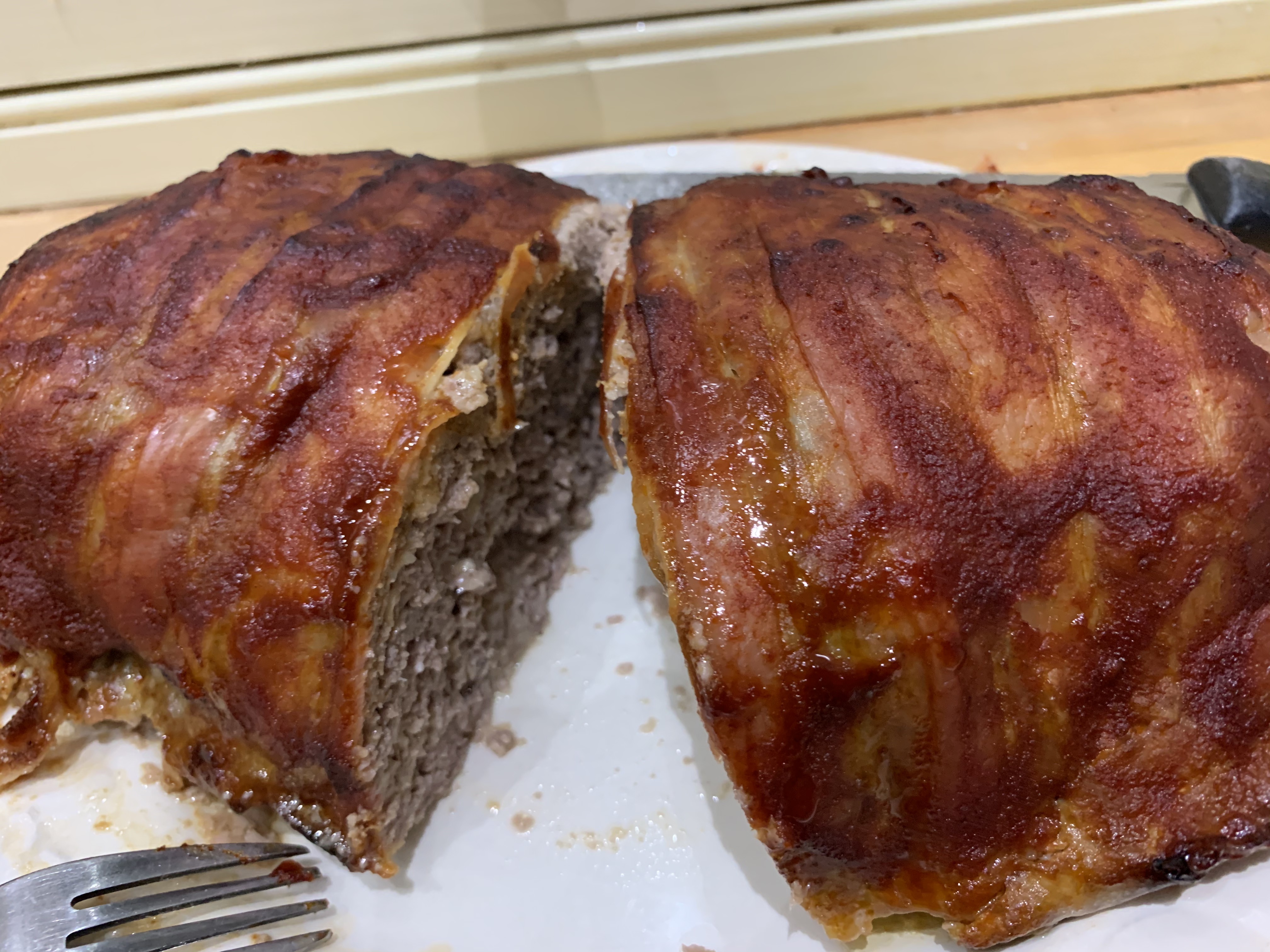
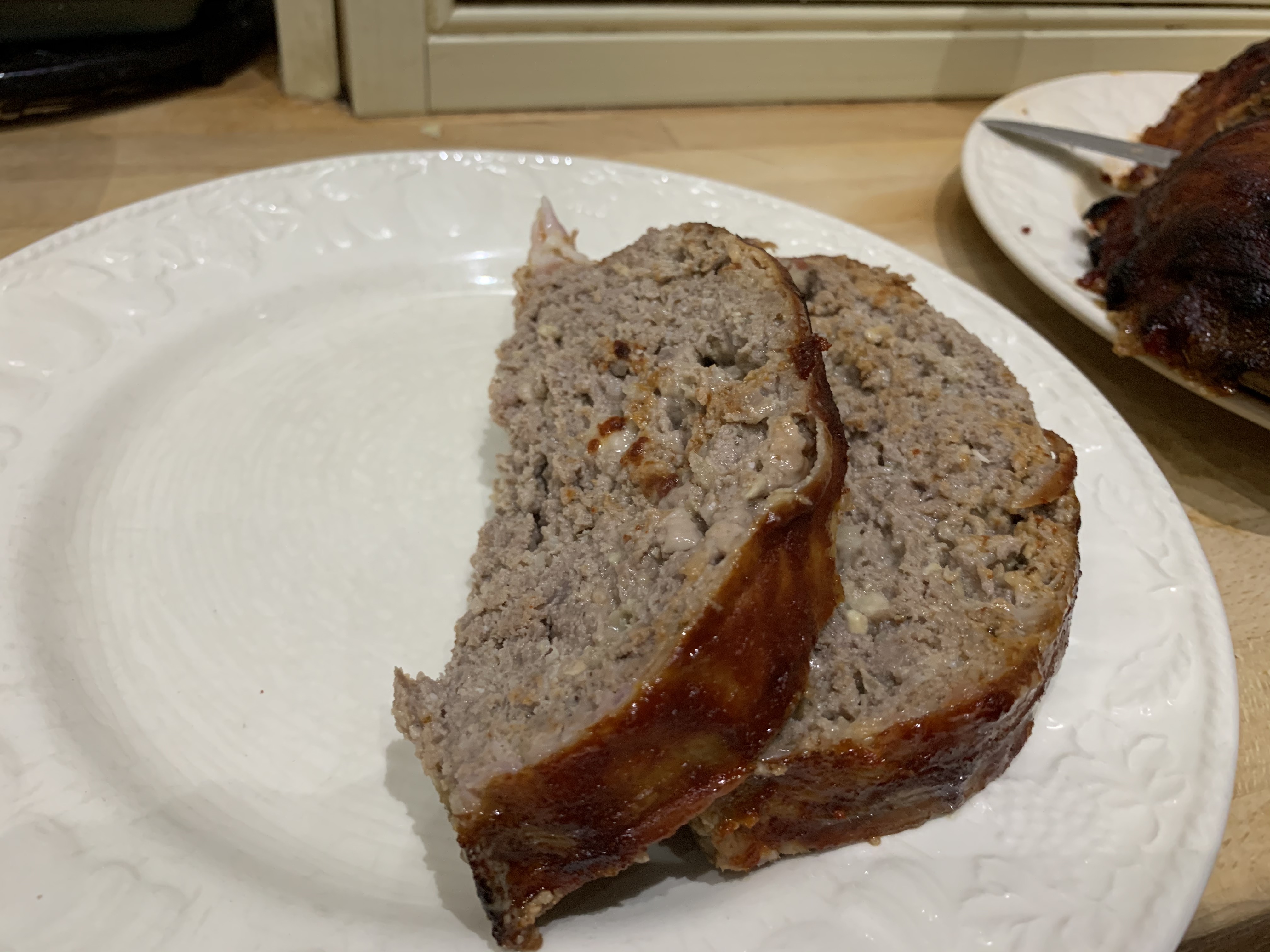
Keto Meatloaf with Bacon (and cheese)

I had a yearning for an American meatloaf especially as we have just had a delivery of grass-fed beef. We buy it from here; the minced steak is particularly good. The original recipe came from the ‘greenandketo’ website but I modified it slightly, to have a cheese burger flavour. I also brushed the top with the last of the keto BBQ sauce watered down. The recipe serves 8; 1 slice is approx, 3 carbs.

Ingredients:

  • 2 lb of ground beef (80% lean:20% fat), or a mix of ground beef and pork
  • 1/2 small onion, finely chopped – about 1/2 cup
  • 4 oz button or crimini mushrooms, chopped finely – about 1/2 cup
  • 1 tsp salt
  • 1 tsp black pepper
  • 1/2 tsp garlic powder
  • 1 tsp Italian herbs
  • 1 1/2 cups of finely grated cheese; approx. 7 oz; I used lactose free mature cheddar
  • 2 eggs
  • 1/3 cup almond flour
  • 6 strips of bacon. I used a whole pack of Marks and Spencer nitrite-free bacon.
  • 1/4 cup keto-friendly ketchup or BBQ sauce, optional.

Method

Preheat oven to 350F ( 180C/160C fan assisted). Prepare a rimmed sheet pan with tinfoil. The original recipe suggests lining a 9×5 inch pan with clingfilm, to use as a mould. I did mine free form.

Prepare the vegetables. I used a food processor, to chop the onion and mushrooms, into small pieces. Place the veg into a large mixing bowl.

Add the ground meat, eggs, garlic powder, herbs, salt, pepper, almond flour and grated cheese. Use your clean hands to gently mix the ingredients together, until combined.

Shape the meatloaf: use your hands to shape the mixture into a loaf on the prepared baking sheet. This was easier for me. You can put the mixture into the prepared 9×5 loaf pan and then turn it out onto the prepared baking sheet. You can also just bake it in the tin (minus the clingfilm, or plastic wrap in USA).

Cover the top of the meatloaf with streaky bacon slices. Bake for 45 minutes (this was accurate at 160C in a fan-assisted oven). Then take it out and brush with ketchup or BBQ sauce (optional). Bake for about 10 minutes more, or until the internal temperature registers 150 F on an instant-read thermometer. I used our meat thermometer and it registered the right temperature for beef. Let it rest for at least 10-15 minutes before serving. Cut into thick slices and serve.

Cooked and cooled meatloaf can be stored covered in the fridge for a couple of days or freeze it in slices. Personally, I rarely want the same meal for more than one day. Mac and cheese being the exception. I am not Keto, as I eat some carbs, but I try to make healthy choices because of my IBS.

Keto Chicken Thai Curry

I made this curry sauce up based on searching the internet and adapting what I read to make it easy. I had some leftover chicken and different vegetables to use up; so decided to have a go at making my own sauce. I enjoyed it and I hope you do too. We all need quick recipes when we are hungry.

Ingredients:

  • 1/2 cup smooth unsweetened peanut butter
  • 400ml tin of full fat coconut milk
  • 2 tsp sriracha sauce
  • 2 tsp tamari soy sauce
  • 2 tsp sesame oil
  • 2 heaped tsp Thai Red curry paste
  • 400ml vegetable stock
  • half a large cooked chicken
  • 1 courgette, thinly sliced
  • 100g mushrooms, thinly sliced
  • 200g spinach
  • Half a lime, juice squeezed on top
  • Chopped fresh coriander, to garnish

Method:

  1. Place the peanut butter in a bowl, and gently heat in a microwave. Once warm, stir in the sriracha, tamari soy sauce and a third of a cup (approx 80ml) of the full fat coconut milk.
  2. Heat the oil in a pan over a medium heat. Add the Thai red curry paste and cook until fragrant.
  3. Take the pan off the heat. Add the peanut butter mixture to the Thai curry paste, stir until combined.
  4. Placing the pan back on the heat, slowly add the rest of the coconut milk to the mixture, and bring to a boil to thicken.
  5. Reduce to a simmer, and add the vegetable stock. Stirring every now and again. Add the chicken and vegetables minus the spinach to the sauce.
  6. Allow the sauce to simmer for 15-20 minutes, or until it has reduced and thickened slightly to the consistency you like. Stir in the spinach and put the pan lid on until wilted.
  7. Taste and adjust seasonings so it’s to your liking. I like to add some squeezed lime juice, and chopped coriander sprinkled on top.

Note: If you want a bit more of a kick feel free to add some more curry paste, or even a few red chilli’s. This is a great quick and easy sauce to make, feel free to make it your own by adding your favourite vegetables.

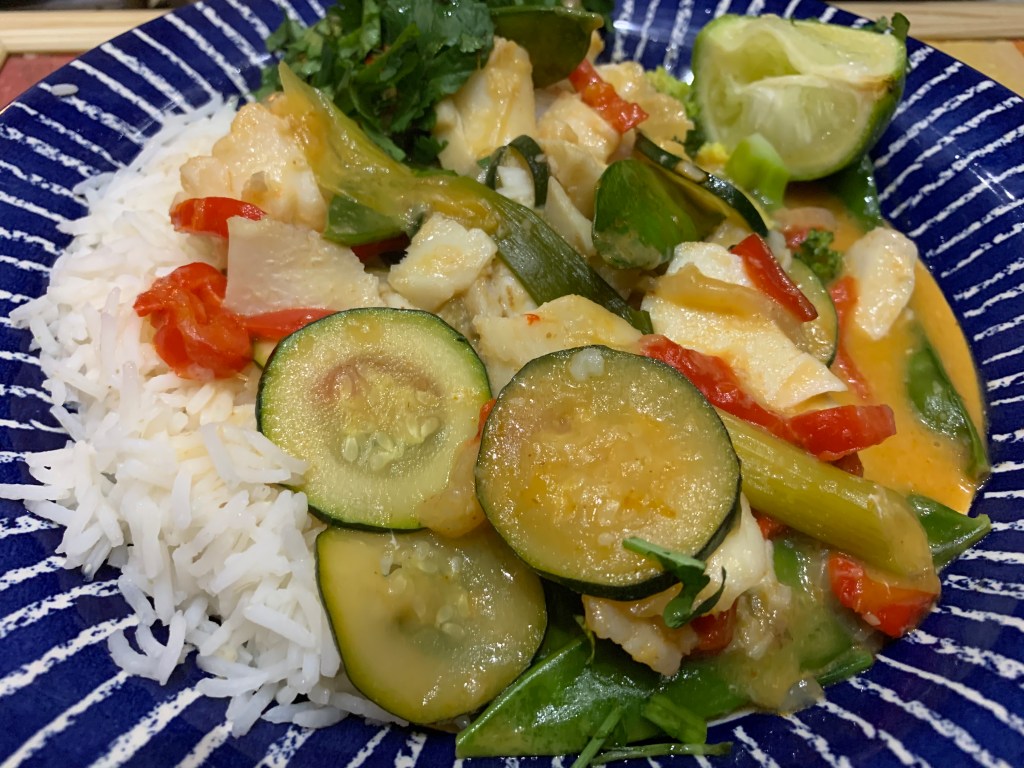
Thai Coconut Fish curry (Keto)

I wanted to try something different this week. I found this recipe on the Keto Queens website; it is not only delicious but also has such a great aromatic flavour. It is really adaptable and great for clearing out the vegetables in your fridge. I’ve adapted this recipe to suit what I wanted.

Ingredients:

  • 1 tbsp avocado oil (or any other oil; I used olive oil)
  • 1 small yellow onion, thinly sliced
  • 1 medium red bell pepper, thinly sliced
  • 1 courgette, thinly sliced* (The recipe says to use a yellow squash, but I opted to use a courgette instead)
  • 2 large garlic cloves, crushed or minced
  • 1/2 tbsp fresh-grated ginger
  • 2 spring onions, thinly sliced *
  • 100g mangetout *
  • 1 tsp tamari sauce
  • 1/2 tsp fish sauce
  • 1/2 tsp sea salt
  • 1/2 tsp crushed red pepper flakes, though you can use more/less, depending on the taste you desire
  • 2 1/2 cups approx 600ml water* (I substituted this for 400ml vegetable stock instead as I wanted the sauce thicker)
  • 1 400ml can full-fat unsweetened coconut milk
  • 1 lb 450g cod fillets or any other white fish e.g basa, seabass (I used 1 1/2 lbs)
  • Fresh coriander for garnish, optional
  • Fresh lime wedges to squeeze on top, optional

Notes (*): The recipe is very adaptable; and is great for using up any veg you have left in the fridge. So feel free to use any vegetables you want! I found that the sauce was a little thin to my liking; so I thickened it with a teaspoon of Xanthan Gum whisked into a little water. After tasting I also added in 2 heaped teaspoons of Thai Red curry paste to give a stronger flavour.

Method:

  1. Heat oil in the pan, over a medium high heat. Add your vegetables: onion, red bell pepper, courgette, spring onions, and peas. Stirring occasionally until they begin to soften.
  2. Add the garlic and ginger; cook for 30 seconds.
  3. Stir in the rest of your ingredients minus the fish: tamari sauce, fish sauce, salt, red pepper flakes, vegetable stock, and coconut milk.
  4. Bring to a simmer, and add the cod fillets. Cook for 10 minutes, until the fish is opaque and flakes easily.
  5. Taste and add seasoning as desired. I wanted a bit more of a kick, so added 2 heaped teaspoons of Red Thai curry paste.
  6. The sauce can be a little thin, I thickened it with a teaspoon of Xantham gum, so it was to my liking.
  7. Garnish with fresh coriander and lime, if you desire. Serve with some rice and flatbreads.

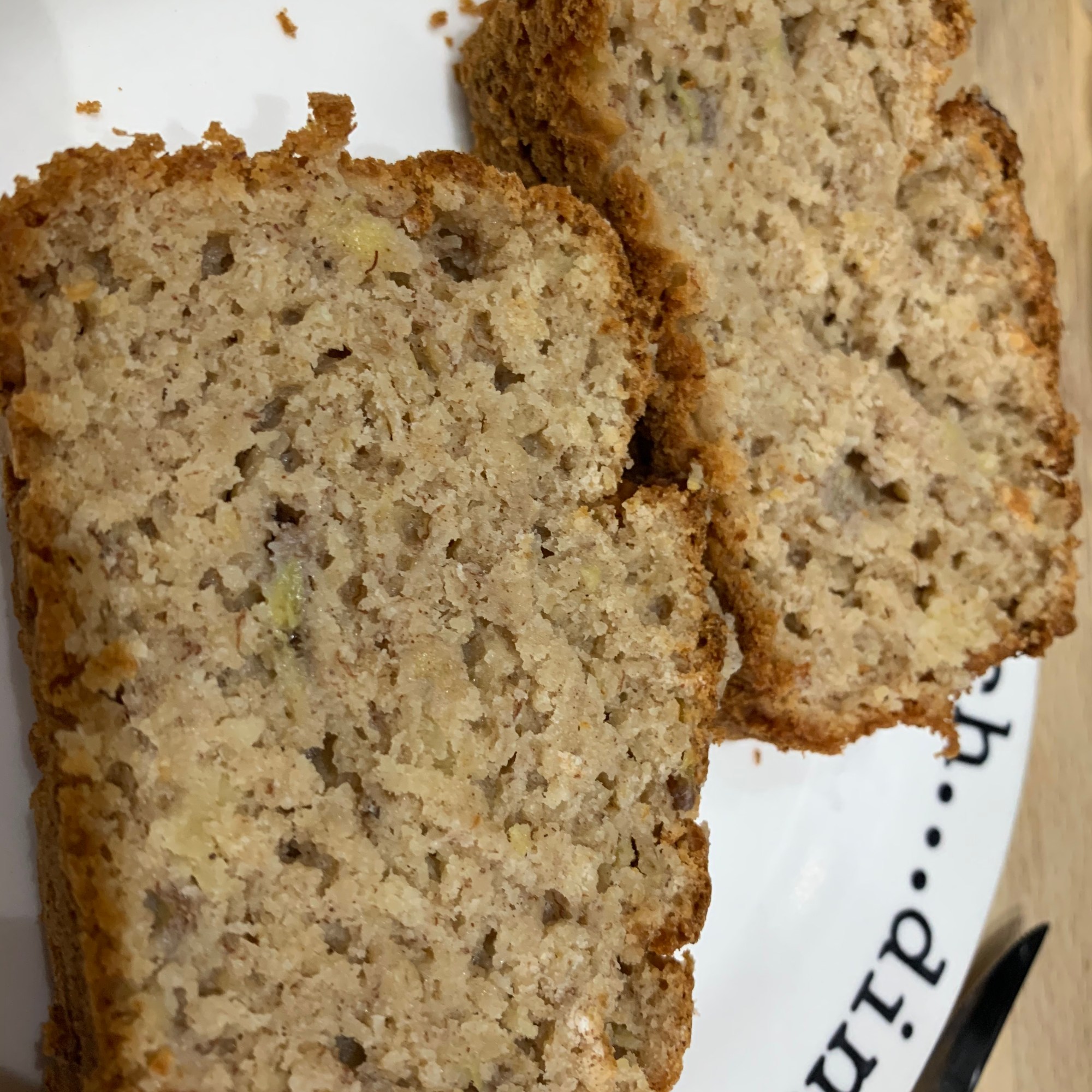
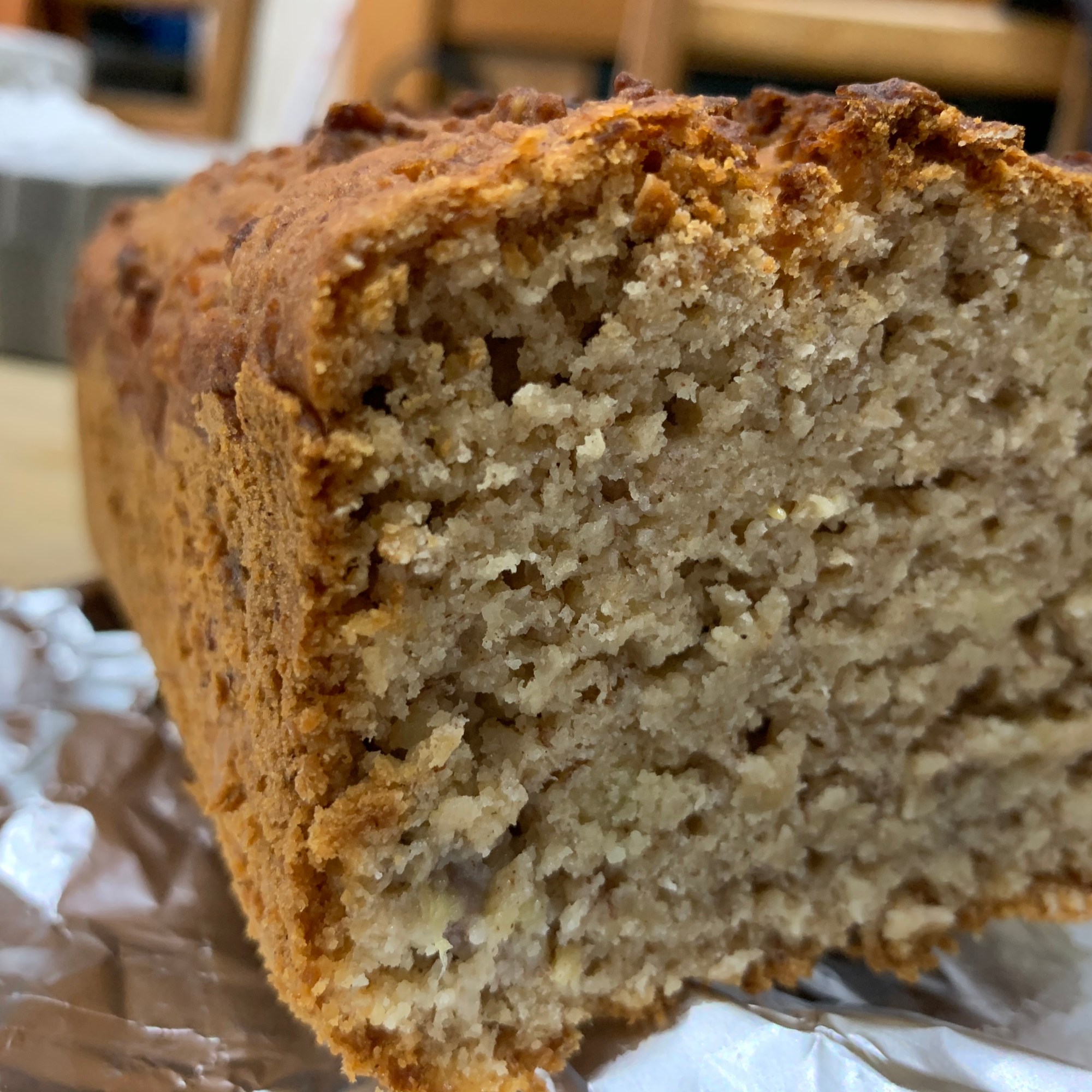
Best ever Banana Bread (Gluten-free)

I don’t know where this recipe originally came from, though it is one my family and I have adapted. This Banana bread is truly delicious and has a great flavour. It is the perfect breakfast first thing is the morning, with a large coffee; it makes the perfect on-the-go snack.

Ingredients:

  • 3 medium ripe bananas mashed (approx around 1 1/2 cups or 340g when mashed)
  • 1/2 tsp vanilla extract
  • 1 whole egg
  • 3 tbsp butter melted (or alternatively you can use coconut oil)
  • 1/4 cup organic brown sugar
  • 2-3 tbsp maple syrup
  • 3 1/2 tsp baking powder
  • 3/4 tsp salt
  • 1 tsp cinnamon
  • 3/4 cup of milk (I use almond milk)
  • 1 1/4 cup almond flour
  • 1 1/4 cup gluten-free flour
  • 1 1/3 cup of gluten-free oats

Note: you can add nuts, raisins, or even chocolate chips to your bread.

Method:

  1. Preheat the oven to 176 C / 156 C in a fan-assisted oven. Line or lightly grease a loaf tin (the one I use is 12″x 4″). Note: if you want a deeper cake use a smaller loaf tin.
  2. Peel and mash your bananas in a large mixing bowl, until smooth.
  3. Add the egg to the banana mixture, and whisk together until combined.
  4. To the bowl, add the melted butter, brown sugar, vanilla extract, milk, maple syrup, baking powder, cinnamon, and salt. Mix together until combined.
  5. Then add the rest of your dry ingredients: almond flour, gluten-free flour, and gluten-free oats to your mixture. Stir well together, until all ingredients are incorporated.
  6. Pour your mixture into the baking tin; smooth the top with a spoon. Bake for 1 hour, or until the loaf is firm and golden brown on top. A knife or toothpick should come out clean when inserted.
  7. Let the bread rest in the pan for 10 or so minutes; lightly loosen the sides with a knife, or pull on the grease proof paper.
  8. Transfer to a cooling rack or plate, and let cool completely before cutting.
  9. Store in an airtight container; you can reheat it in the oven, microwave, or toaster until it’s warm and tender.