Blog

Apraxia Awareness Day 2020: Information on Apraxia

In the UK this is known as Developmental Verbal Dyspraxia.

Dr Edythe Strand is the Emeritus Professor and Consultant in the division of Speech Pathology, the Department of Neurology at the Mayo Clinic. In this video she provides detailed information for parents on Childhood Apraxia of Speech (CAS). 

My US-based speech and language therapy programme focuses on developing oral motor planning. Dr Strand describes there are many differences in terms of severity and impact but emphasises in many instances, it is an oral motor planning disorder. My apraxia of speech comes from generalised dyspraxia, so as well as oral motor speech work, my programme works on body strength and vision therapy. 

Please note – these are things that helped me, but it was all under the supervision of a specialist SaLT. I am just sharing with you my experience of strategies that have promoted improvement. I have no affiliation with any of them.  

The things that have helped me are:

  • Having a speech and language therapist who is a specialist in apraxia. This is the most important aspect. I went to America as there is more understanding and practical specialism in this condition. I feel we wasted time trying to find a specialist in UK.
  • Identify any hindrances to speech: three years ago, I was assessed with a tongue tie and had it released (frenuloplasty) by an otolaryngologist in Los Angeles. It sounds cool but I didn’t eat or see much in LA other than Santa Monica. This was never identified in UK. This surgery was a significant milestone in improving my speech.
  • Daily therapy with many opportunities for speech development and disseminated speech practice, delivered by a well-trained team; reviewed and revised regularly by your SaLT so that the programme is developmental. A focus on independence in speech.
  • A focus on imitation as even now I can watch someone’s mouth which helps me with my oral motor planning.
  • Use of the ForBrain Headset. This is one of the strategies that helped me made significant progress in a very short time. It is a headset that uses bone conduction, dynamic filter and auditory feedback loop. It helps me hear my voice more clearly during speech practice so I identify how to improve. There is a signidficant about of research available on the site.
  • Use of the IOPI device. I started using this tongue strengthening medical device five days  after surgery. IOPI stands for Iowa Oral Performance Instrument. My tongue strength was so low initially but after three years, it is now within the normal range for my age. 
  • Smart Palate: this device is quite unique, I have used it for several years. It provides bio-feedback with an image of my tongue placement during different speech sounds. It helps me to gain a clear understanding of what changes need to be made. We also set interim goals against the standard tongue patterns for different sounds based on my best one so that it’s developmental.
  • Rapid Syllable Transition Treatment (ReST; University of Sydney): the focus on this is blending, rhythm and extending syllables. There are several information documents: for parents and SaLTs. Training videos are available of the site.
  • Pam Marshalla’s techniques. Sadly Pam died a few years ago but her website and publications are still live and extremely valuable. We still use them; this publication has been particularly helpful for us. It is clear and specific.
  • Specific use of tools identified by your SaLT to help develop sounds: Ark therapeutic tools; TalkTools and Speech Buddies. These can all help jaw stability, tongue independent movement, lip closure and cheek strength. Using these were an important foundation for my oral motor development. However, fading the use of these is equally important; example: speech practice with the tool followed by one without the tool. It is important not to create dependency.
  • The use of techniques such as:
  • PROMPT speech technique helped me when I was starting out but is no longer needed.
  • Voice Aerobics for fluency/prosody and singing which we still use; it is also great fun.

NOTE:

All of these have been part of my programme at some time; their use overseen and developed by a specialist SaLT.

I am not recommending these as a programme they are purely for awareness-raising and information.

The critical part is to find a specialist speech and language therapist who will provide you with the right programme. Every person with speech apraxia is different.

These are purely part of my journey and as the end-user of a SaLT programme have helped me to make such progress. It is my opinion.

Apraxia Awareness Day 2020

Joanna Bendel has worked with people around the world to produce a video for Apraxia Awareness Day; ‘Lets Paint the World Blue!’ to raise awareness and share the stories of people living with apraxia; one in ten people are living with this speech disorder.

Here’s the link, please watch it.

As you can see, apraxia of speech does not define who you are.

Thanks.

Apraxia Awareness Day 2020 Show-casing strong advocacy for apraxia of speech

I have spotlighted Joanna Bendel in a previous blog. She is an awareness-raising campaigner and I have followed her YouTube blog for years. She works hard to change public attitude, in America, towards apraxia of speech. She is succeeding.

I know her through involvement in a group called Young Adults with Dyspraxia/Apraxia (YADA). This was set up by The Cherub Foundation in America which provides a mine of information for parents and support for people who are struggling. They have provided information for me and my family. We found my apraxia specialist through the Cherub Foundation.  YADA is a closed group that helps young people to share with others in a similar situation.

Joanna is a true inspiration to me. She puts herself in the spotlight which brings both positive and negative attention. 

This is a link to her YouTube channel; I suggest you subscribe. I have followed Joanna’s Vlog for years. She used to use her communication aid and people were encouraging her to use her speech. One Christmas she decided to and has developed confidence in using her speech since. Just think about the courage that took. When I need a boost, I watch her YouTube channel. I am hoping to have some level of Joanna’s confidence in the future but like most people I’m still on a journey. She does not let apraxia define who she is!

This is a video of her on a News programme in 2018 raising awareness of the condition. How many of us would want to be interviewed on a news programme?

This link is her latest video update recapping her journey. It is truly inspirational to anyone; especially those with speech disorders. If you do nothing else, please take the time to watch it

Please stop and think how lucky you are to have volitional speech, those of us who have speech difficulties are no lesser a person. Everyone has difficulties in their life, it’s what makes us human. As such, we need to be more accepting of differences.

As I said in yesterday’s speech apraxia blog, if you know someone with a speech disorder, take the time to include them and see the person not their difficulties; it will enhance both your lives.

My Journey so far with Apraxia/Developmental Dyspraxia

My aim of this blog is to raise awareness of this speech disorder. Tomorrow it’s Apraxia Awareness Day in USA (14/05/20); we don’t appear to be raising awareness of this speech disorder in the UK. I will be posting more blogs to raise awareness over the next few days as May is Apraxia Awareness month.

This is my story:

I have Dyspraxia which impacts on my whole body, the most obvious when you meet me is how it impacts on my speech. If you passed me in the street you wouldn’t see any difference. I nod and smile to people when they let me pass or when they smile as they pass, which people do. 

I was wrongly diagnosed at an early age. That was a ‘fun’ experience as I understood everything but couldn’t shout at them to tell them what I thought. 

My poor early education resulted in me eventually having a diagnosis of PTSD for which I’m still having weekly EEG Neurofeedback. Would you believe that I received no speech and language therapy (SaLT) during my early years education other than private sessions funded by my family. Even the private sessions had little impact on my speech; somehow the focus was wrong. There seems to be a lack of awareness and resources in the UK in relation to apraxia/developmental dyspraxia. From my experience, there is a clear deficit in available appropriate therapy between the USA and UK.  

At the age of eleven I was assessed and acknowledged as intelligent. My family paid for a consultant educational psychologist to work with me from an early age, visiting both home and school. At eleven my receptive language skills were assessed as at least 8 years above my chronological age. I am currently completing a Level 3 qualification in Creative Writing with the aim of progressing on to higher education. This disparity between speech output and assessed intelligence is what leads to a diagnosis of developmental verbal dyspraxia (DVD; UK) or childhood apraxia of speech (CAS;USA). This is a general fact sheet on Verbal Dyspraxia.

My speech is developing through a specialist programme that has been in place for a number of years although I am wary of using it with people I don’t know. I have a realistic goal of developing an increasing framework of words and functional phrases. I still have a US-based SaLT who is an apraxia specialist; I visit her annually. She sets the programme and a trained team delivers it. We regularly video my targeted programme and share a wide range of videos via iCloud and have tele-therapy meetings via Zoom with the SaLT. 

My whole programme is broader than SaLT and encompasses strategies for academic learning, vision and exercises for strength which is important in dyspraxia that impacts on the whole body; it is modified regularly as I make progress.

I have involvement in a small group called Young Adults with Dyspraxia/Apraxia (YADA). This was set up by The Cherub Foundation in America. YADA is a closed group that helps young people to share with others in a similar situation. For the first time, I talked to someone with developmental verbal dyspraxia (CAS) and felt better about myself. This made me feel better especially after my school experiences. 

My goal is to raise awareness of this speech disorder and how you can help on a personal level:

  • If you are reading this, please stop and think how lucky you are to have volitional speech, those of us who have difficulties are no lesser a person. Everyone has difficulties in their life of some sort. 
  • People are often uncomfortable when there is a speech deficit of any type and fill the vacuum with too much talk or ignore. I have experienced this a number of times as a child and it made me feel worthless.
  • Slow down and look at the person, say something and give them to respond because most people will acknowledge verbally or non-verbally in some way and human communication is often non-verbal anyway. Take the time to communicate effectively. 
  • If someone uses a communication aid follow the same approach just take time to include them properly in a conversation even if it’s a group.
  • My message is simple. Stop being uncomfortable or afraid and engage; see the person not their deficit; take the time to see their strengths and not their difficulties; it will enhance both your lives.

Keto Cinnamon Coffee Cake (gluten-free, dairy-free)

I love cinnamon coffee cake as it’s spicy and has a tender crumb. However, I don’t like the high levels of sugar in traditional recipes. On Sunday, I felt a need for cake. I am blaming this on the coronavirus pandemic. Food has taken on a higher importance while we are in lockdown and I have no wish to be rotund when this passes. I researched a keto recipe and found this recipe on sweet as honey . It is a logical recipe, laid out well and accurate. As always, it is worth using weights for dry ingredients for accuracy; there’s too much margin for error in using cup measures. The recipe makes 16 pieces and nutrition for one piece: 5.3g Carbs, 14.7g Fat, 1.7g Fibre and 3.6g Net Carbs.

Ingredients:
Keto Coffee cake batter:

  • 2 cup (245g) almond flour
  • 1/4 cup (31g) coconut flour
  • 1/3 cup + 2 tsps (93g) Erythritol
  • 2 tsps baking powder
  • 1/4 tsp salt
  • 3 large eggs, at room temperature
  • 2 tsps vanilla extract, at room temperature
  • 1/2 cup melted butter, or melted coconut oil (I used coconut oil)
  • 1/3 cup unsweetened almond milk, at room temperature

Cinnamon streusel topping:

  • 1 cup (120g) almond flour
  • 1/3 cup (90g) Erythritol
  • 1/3 cup melted butter, or melted coconut oil (I used coconut oil)
  • 1 tbsp ground cinnamon
  • 1/2 tsp ground nutmeg
  • 2 tsps instant coffee, optional (I didn’t use this)
  • 1/2 cup chopped walnuts, optional (I didn’t use nuts)

Sugar-free glazing (optimal):

While I am sure this would improve the finish of the cake, I don’t particularly like the after taste of keto powdered sweetener; I didn’t do this part.

  • 1 cup sugar-free powdered sweetener
  • 2 tbsps unsweetened almond milk

Method:

  • Preheat the oven to 180C.
  • Line a square baking tin (9×9 inches) with grease-proof paper, and set aside. I used an oblong tin which was about the same size. I put pieces of parchment paper under the lining and hanging over the side of the tin so I could lift the cake out easily after baking/cooling.

Cinnamon streusel:

  • In a mixing bowl, combine all the streusel ingredients together, the order doesn’t matter, until it forms a crumble like texture. Then, set aside.
  • Note: I made this in the food processor but felt it made the mixture too fine. It still had a crunch and provided a good contrast to the tender crumb of the cake layers.

Coffee Cake:

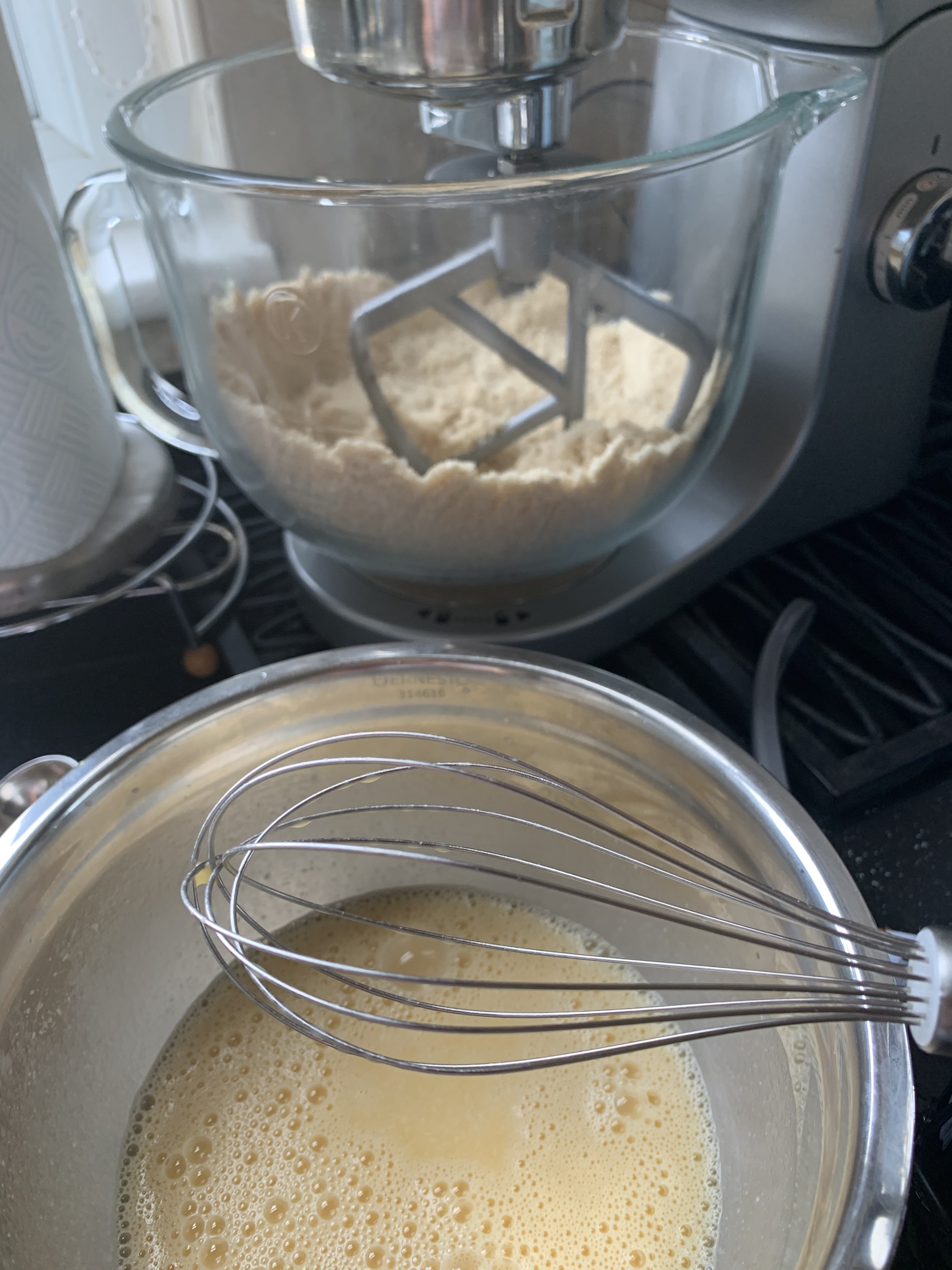
  • In a mixing bowl, combine all the dry ingredients together: almond flour, coconut flour, baking powder, erythritol, and salt.
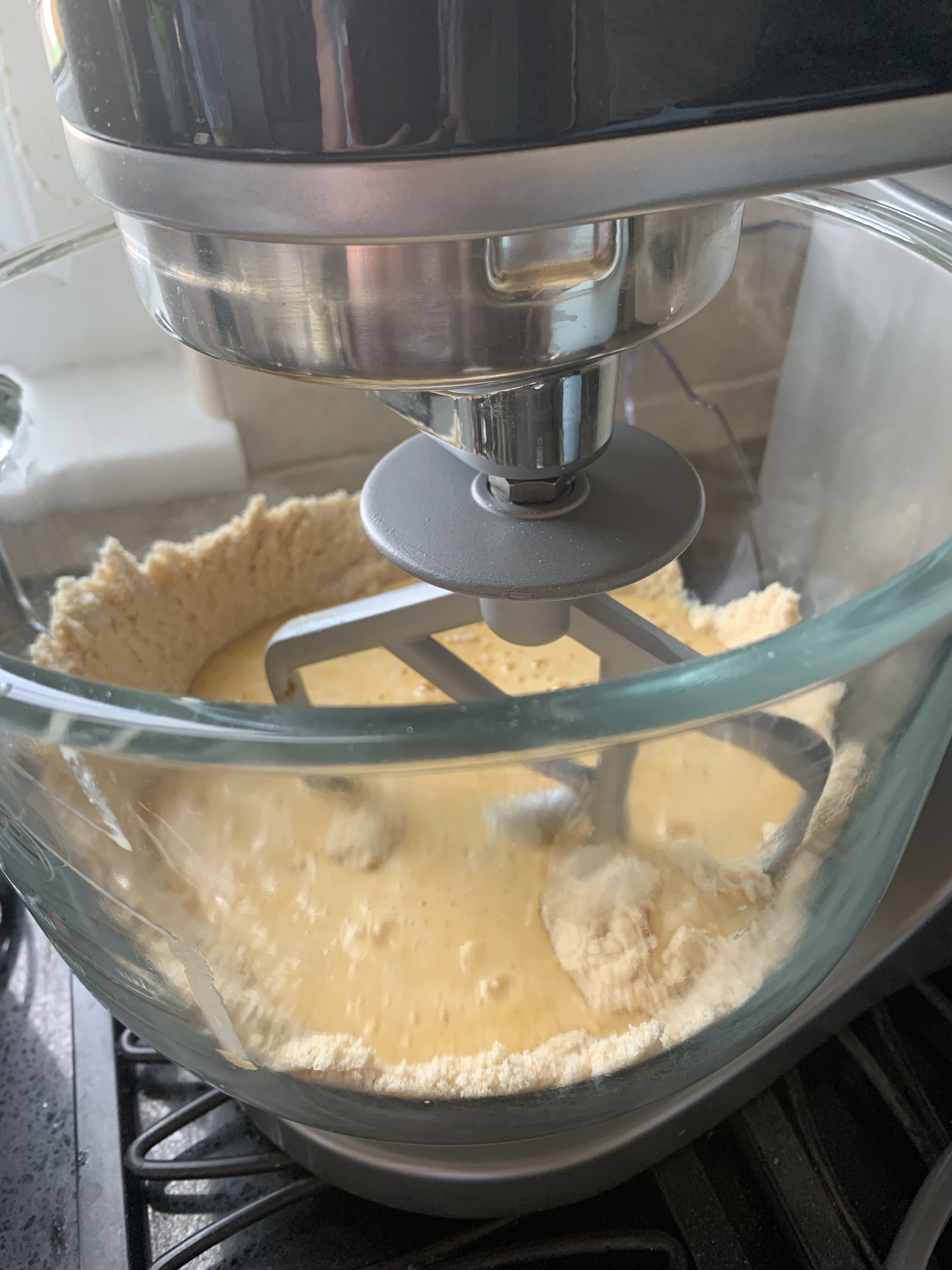
  • In another bowl, whisk the eggs, melted butter or coconut oil (make sure the melted fat is at room temperature, and not hot otherwise it will cook the eggs), almond milk, and vanilla extract until combined.
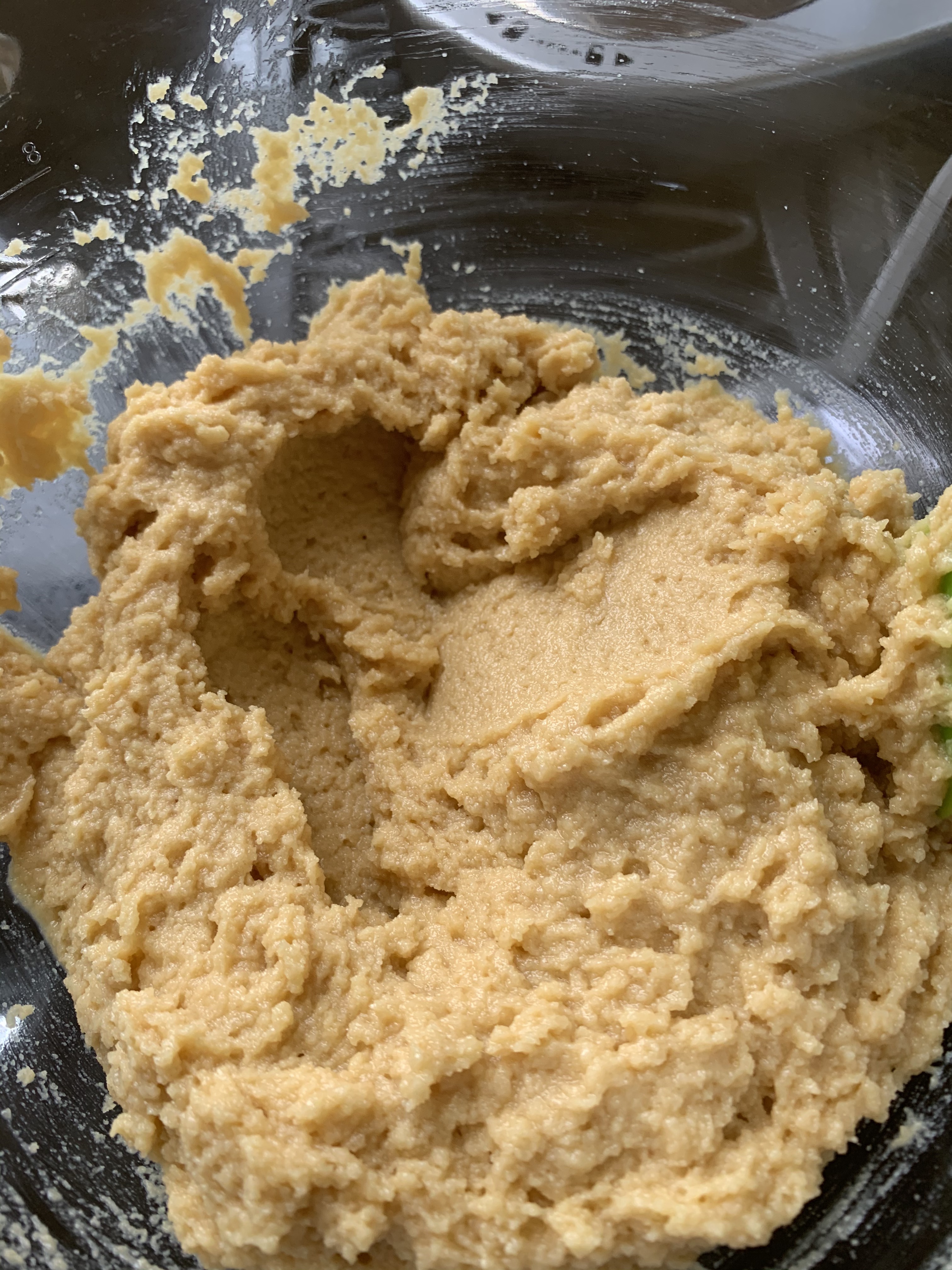
  • Add the wet ingredients to the dry ingredients, and fold in with a spoon until fully incorporated, making sure no lumps remain. You could also use an electric beater instead.
  • Spread half of the coffee cake batter into the lined baking tin, make sure it’s evenly spread.
  • Sprinkle half of the cinnamon streusel on top of the cake batter, then spread the rest of the batter on top of the streusel layer.
  • Then, sprinkle the rest of the streusel topping on top. Slightly press with a spatula to ensure the streusel topping is stuck into the batter.
  • Bake for around 30-40 minutes, or until the cake is golden brown and a skewer inserted comes out clean.
  • Allow the cake to cool for around 10 minutes, then lift the cake out of the tin, and transfer to a cooling rack. Allow to cool until the cake is room temperature.
  • Optional: Once the cake has cooled, drizzle the sugar-free glaze on top. To make simply combine the powdered erythritol and almond milk and stir until it reaches your desired thickness. If you want it thicker simply add more erythritol, thinner add more almond milk.
  • Cut the cake into 16 squares, and store in an air-tight container.
  • Enjoy!!